Buying IPTV safely and legally comes down to a single question: does the provider hold broadcasting rights for the channels being sold? Licensed IPTV services (YouTube TV, Hulu + Live TV, Fubo, Sling TV, Philo, DirecTV Stream, Frndly TV) publish carriage agreements, operate transparent billing, and appear in the Apple App Store, Google Play, and Amazon Appstore. Unlicensed IPTV resellers advertise 15,000+ channels for $10–$20/month, require sideloaded apps, and operate in legally risky territory that also carries payment fraud and security risks.
This guide covers the practical steps to buy IPTV safely and legally in 2026: how to verify a provider’s licensing status, what payment methods offer buyer protection, which red flags signal an unsafe provider, and how the licensed IPTV market compares on price. Every recommendation below assumes the goal is a subscription that will still exist next month, with money back if it does not.
The Legal Line: Licensed vs Unlicensed IPTV
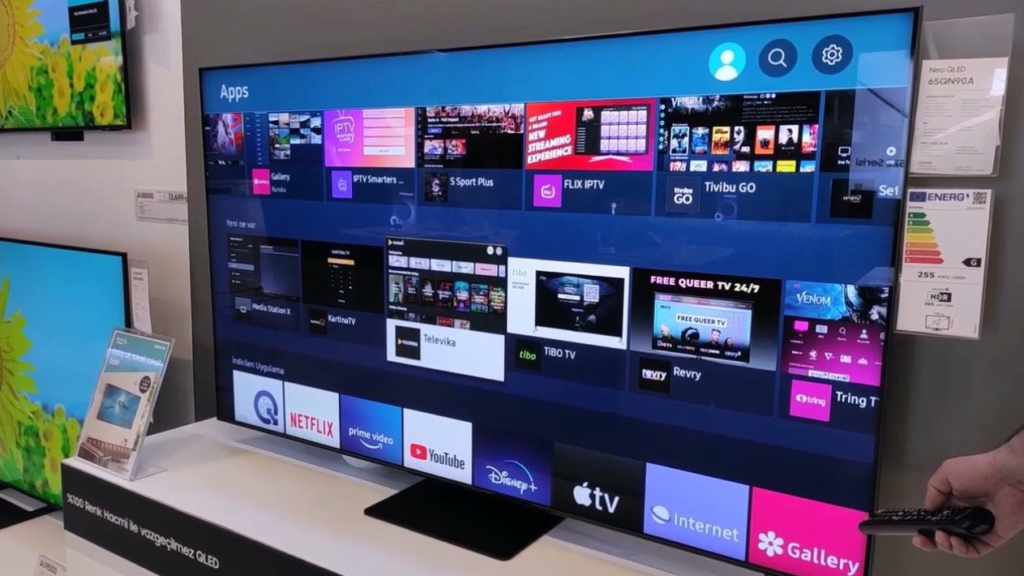
IPTV stands for Internet Protocol Television, which is a delivery method rather than a legal category. Netflix, YouTube TV, Hulu + Live TV, and Sling TV all deliver video over internet protocols — the delivery method alone does not make a service legal or illegal. What determines legality is whether the provider holds the rights to stream the channels, films, sports, and VOD library it sells.
The distinction matters because unlicensed IPTV sellers use the same vocabulary as licensed services: EPG, VOD, HD, 4K, catch-up TV, multi-device support. A polished-looking IPTV app can still be fed by unauthorized streams, and a plainer-looking service can still be fully licensed.
Licensed IPTV services hold carriage agreements with the networks whose channels appear in the lineup. Licensed providers geoblock content by region because rights are territorial, publish company addresses, appear in official app stores, and accept mainstream payment methods.
Unlicensed IPTV services deliver channels without carriage agreements. Unlicensed providers advertise channels from every region simultaneously (US, UK, EU, Middle East, Latin America, Asia), require sideloading because official app stores reject them, and often accept only crypto, wire transfer, or PayPal Friends & Family with no buyer protection. Enforcement operations against unlicensed IPTV services intensified in 2026, with coordinated global takedowns like Operation Switch Off leaving subscribers without service and without refunds.
The Safe Default: Licensed IPTV Providers in 2026
The simplest way to buy IPTV safely and legally is to start with a licensed provider. Every service below operates under carriage agreements, publishes transparent pricing, and offers a real free trial or standard refund process.
Quick facts (licensed IPTV providers, as of July 2026)
- YouTube TV: $82.99/month; 100+ live channels; 10–21 day free trial; available on every major platform
- Hulu + Live TV: $89.99/month; 95+ channels plus Disney+ and ESPN Unlimited bundled; 3-day free trial
- Fubo: $73.99/month (Pro); 190+ channels; 5-day free trial; sports-heavy lineup
- Sling TV: $45.99/month (Orange or Blue); modular add-ons; first-month discount instead of trial
- DirecTV Stream: $34.99/month (MyEntertainment genre pack); 90+ channels on the base tier; 5-day free trial
- Philo: $28/month; 70+ entertainment channels; 7-day free trial
- Frndly TV: $8.99/month (basic); 50+ family channels; 7-day free trial
Common markers of a licensed IPTV provider
- Available in the Apple App Store, Google Play, and Amazon Appstore under the provider’s own name
- Geoblocked outside its licensed region (a positive sign — rights are being enforced)
- Published corporate entity with a real business address
- Standard payment processing through Visa, Mastercard, PayPal, Apple Pay, or Google Pay
- Cancellation possible inside the account dashboard without contacting support
Licensed IPTV providers charge $28–$115/month depending on channel count and bundled on-demand services. That price range reflects real licensing costs. Any IPTV service offering 15,000 channels for $10/month is mathematically incapable of paying carriage fees at that scale, which is the first structural sign that the provider operates outside licensing agreements.
The Seven Verification Checks Before Paying for IPTV
Before entering payment details on any IPTV provider — licensed or otherwise — seven verification checks separate legitimate providers from scams and takedown-risk operators.
- Check the official app stores. Licensed IPTV providers appear in the Apple App Store, Google Play, and Amazon Appstore under the provider’s own name. A provider whose only distribution channel is a sideloaded APK from a Telegram link fails this check.
- Look up the domain age. A WHOIS lookup shows when the provider’s website domain was registered. IPTV providers operating for 2+ years are significantly more trustworthy than domains registered in the last 30 days. New domains dominate the IPTV scam category.
- Verify the published business entity. Legitimate IPTV providers publish a corporate address, terms of service, and privacy policy. Providers with no identifiable business entity fail this check.
- Confirm payment methods with buyer protection. Providers accepting Visa, Mastercard, or PayPal Goods & Services allow chargebacks. Providers requiring cryptocurrency, wire transfer, Zelle, Venmo, Cash App, or PayPal Friends & Family remove all buyer protection.
- Read the refund policy. Licensed IPTV services offer 3–7 day refund windows or self-serve trial cancellation. A provider requiring a support ticket in Telegram to cancel is a red flag.
- Cross-reference reviews across multiple sources. Trustpilot, the r/IPTV subreddit, and specialized IPTV review sites cover most active providers. A provider with zero reviews outside its own website fails this check.
- Test with a real trial before paying annually. Any IPTV provider pushing an annual plan before offering a trial period should be treated with skepticism. Legitimate providers earn annual commitments after proving reliability.
Passing all seven checks does not guarantee a IPTV provider is fully licensed, but it eliminates most scam categories and enforcement-risk providers. Failing two or more checks is a strong signal to walk away.
Payment Methods That Protect an IPTV Purchase
The payment method used to buy IPTV determines whether a refund is possible if the service disappears, disappoints, or turns out to be unlicensed.
Quick facts (payment method safety for IPTV purchases)
- Credit card (Visa, Mastercard, Amex): best protection; chargebacks available for 60–120 days depending on issuer
- PayPal Goods & Services: buyer protection covers non-delivery and significantly-not-as-described disputes
- Apple Pay / Google Pay: inherit the underlying card’s chargeback rights; adds tokenization for security
- Debit card: chargebacks technically available but slower and harder to win
- PayPal Friends & Family: no buyer protection — treated as a personal gift
- Cryptocurrency (Bitcoin, USDT, Ethereum): irreversible; zero recourse if the provider disappears
- Wire transfer / Zelle / Venmo / Cash App: irreversible; treated as person-to-person transfers
Licensed IPTV services accept only the top four payment methods. Any IPTV provider steering payment toward crypto, wire transfer, or PayPal Friends & Family is signaling that the operation cannot survive chargeback disputes — which usually means the provider expects disputes.
For an IPTV purchase, using a credit card through the provider’s own website (not a checkout link received in Telegram or WhatsApp) is the safest configuration. If the IPTV service fails to deliver, the chargeback path is straightforward.
Red Flags That Signal an Unsafe IPTV Provider
Certain patterns appear in unsafe IPTV provider setups often enough to serve as reliable warning signs. Encountering two or more of these red flags before payment is a strong signal to switch providers.
- The channel count is implausibly high for the price. No licensed IPTV service can profitably offer 15,000+ channels at $10/month. A provider advertising 20,000, 40,000, or 50,000 live channels at grey-market prices is operating outside licensing agreements.
- Payment is redirected to Telegram, WhatsApp, or a personal messaging app. Legitimate IPTV providers process payment through their own website with SSL and a mainstream payment processor.
- The provider’s welcome email arrives from a free email service (Gmail, Yahoo, Outlook.com) rather than the provider’s own domain.
- The trial requires payment details before activation. Licensed IPTV providers require payment details at signup, but grey-market IPTV trials that require payment before a code is issued frequently charge the card and refuse refunds.
- The provider has no support channel other than a Telegram or WhatsApp handle. No published email address, no ticket system, no phone number.
- Reviews only appear on the provider’s own website. Zero mentions on Trustpilot, Reddit, or independent IPTV review sites.
- The provider’s website was registered in the past 30 days. Newly registered domains dominate the IPTV scam category, especially domains with generic names like
best-iptv-2026-cheap.com. - Long-term plans are pushed before short-term ones. Providers requiring a 6-month or annual commitment upfront, with no monthly option, are structuring the sale to prevent early refund attempts.
An IPTV provider showing three or more red flags is a clear signal to look elsewhere. The savings from a $10/month grey-market subscription do not offset the risk of losing the entire annual payment when the service disappears in month four.
The Legal Risk of Unlicensed IPTV in 2026
Buying unlicensed IPTV carries three separate risk categories, and enforcement has increased sharply through 2024–2026.
Service risk. Enforcement actions like Operation Switch Off (January 2026, coordinated by Eurojust with Europol support) take unlicensed IPTV services offline overnight. Subscribers who paid annually for a takedown-affected service typically lose remaining months with no refund path.
Legal risk to subscribers. In most jurisdictions, running an unlicensed IPTV service is a copyright violation with criminal exposure. Purely watching an unlicensed IPTV stream generally carries lower legal risk than distributing it, but the legal landscape varies sharply by country. The Digital Millennium Copyright Act (DMCA) in the United States, the UK Fraud Act, and similar EU legislation have all been used against unlicensed IPTV operators in the past three years. Some jurisdictions (Italy, Germany, UK) have prosecuted individual subscribers, though these cases remain rare.
Payment and security risk. Unlicensed IPTV provider websites frequently host malware, cryptocurrency drainers, or credential stealers. Payment forms on unlicensed IPTV sites are also common vectors for card skimming, which is why irreversible payment methods increase the exposure.
The safe path in 2026 is a licensed IPTV provider. The savings from unlicensed services rarely justify the combined service, legal, and payment risks — especially when licensed services like Frndly TV ($8.99/month) and Philo ($28/month) exist at prices close to grey-market rates for viewers whose channel needs match the licensed lineup.
What to Do If an IPTV Purchase Goes Wrong
If a payment has already been made and the IPTV service disappears, malfunctions, or turns out to be unlicensed, four steps recover the maximum amount possible.
- Initiate a chargeback immediately. Contact the card issuer or PayPal within the dispute window (typically 60–120 days). Cite non-delivery or significantly-not-as-described.
- Document the transaction. Keep the payment receipt, welcome email, provider website screenshots, and any communication with support.
- Report the provider to hosting and payment platforms. Filing with the domain registrar (found through WHOIS) and the payment processor (Stripe, PayPal) sometimes triggers account termination that protects future buyers.
- Report to relevant authorities if needed. In the United States, the FBI’s Internet Crime Complaint Center (IC3) accepts IPTV fraud reports. In the EU, national consumer protection agencies handle similar complaints. The Motion Picture Association’s ACE alliance tracks large-scale IPTV piracy operations.
Chargebacks succeed most often when initiated within 30 days of the failed IPTV purchase. Waiting past the 60-day mark cuts recovery rates sharply.
The Short Version: Buy IPTV Safely by Default
The safest IPTV purchase in 2026 follows a predictable pattern.
- Start with a licensed IPTV provider available in the Apple App Store, Google Play, or Amazon Appstore
- Use the free trial to test channel lineup, stream quality, and app usability before payment
- Pay with a credit card or PayPal Goods & Services to preserve chargeback rights
- Avoid annual plans on any IPTV provider that has not delivered stable service for at least one billing cycle
- Never pay through cryptocurrency, wire transfer, or Telegram checkout links
- Verify domain age, published business entity, and independent reviews before entering payment details
- Walk away from any IPTV offer with two or more red flags — the market has enough legitimate options that scam-adjacent providers are never worth the risk
An IPTV subscription that costs $30–$90/month from a licensed provider delivers reliable service, real customer support, refund rights, and no legal exposure. That combination is the practical definition of buying IPTV safely and legally in 2026, and it is available at every price point from Frndly TV’s $8.99/month up to Hulu + Live TV’s $102.99/month ad-free tier.